


Educational Inequality in Chile
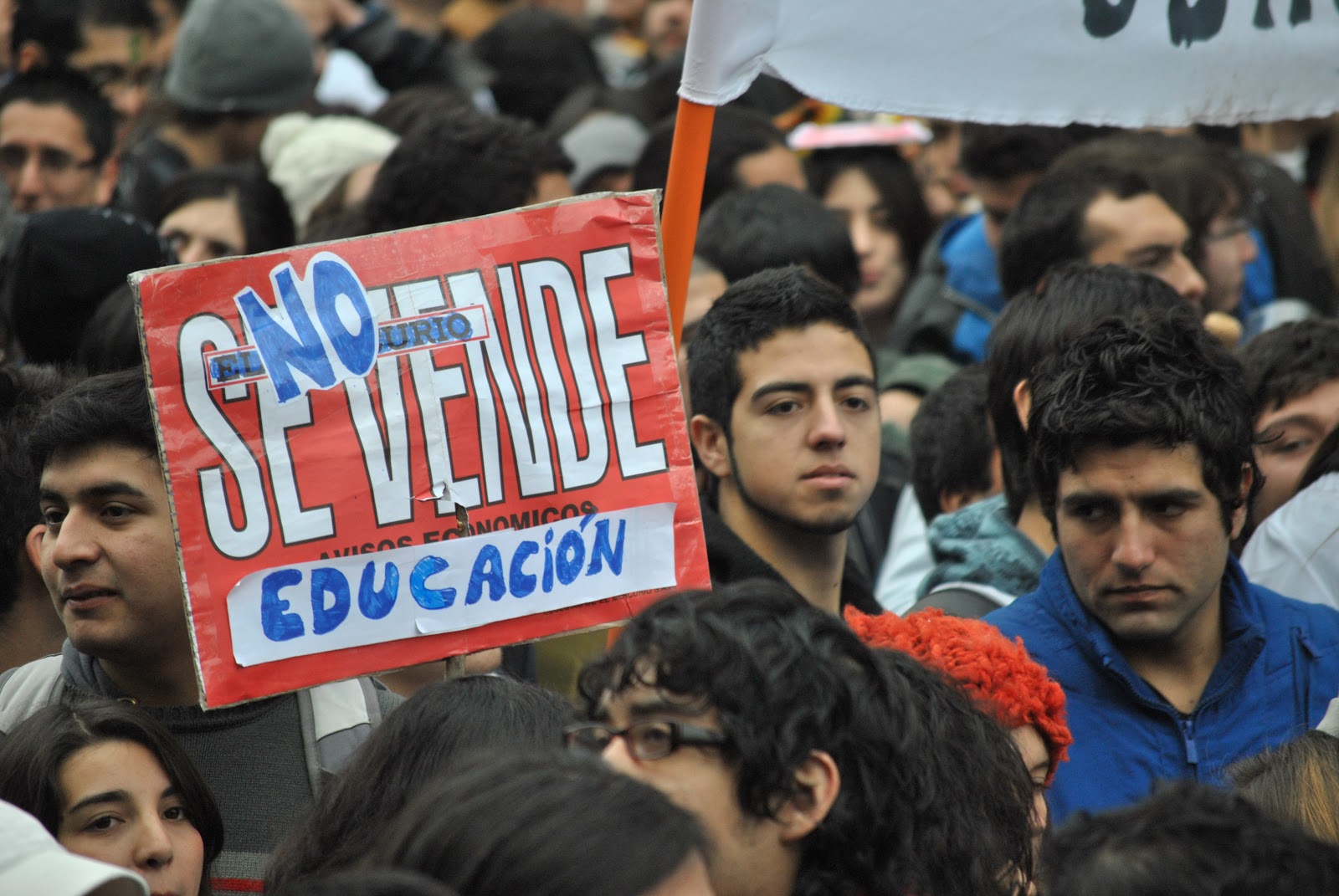
Accessed Wikimedia Commons, August 10 2015.
By Gabriela Dago
August 10, 2026
SANTIAGO, Chile-- Since transitioning from General Augusto Pinochet’s dictatorship to a democratic republic in 1990, Chile has emerged as one of the fastest growing economies in South America. Chile’s GDP grew at an average of 5.30% per year from 1987 until 2015. In addition to political stability, Chile’s economic growth has been accompanied by economic inequality and a deepening divide in the educational system.
According to The Economist, Chile has a Gini coefficient of about 0.5, characterizing its distribution of income as one of the most unequal in the world, and certainly the most unequal in the OECD. Chile’s economic inequality has led to a socioeconomically segregated education system at all levels.
Preschools should create a space where toddlers can interact without the barriers of socioeconomic and cultural differences. Too often in Chile a preschooler’s experience is marred by unequal resource distribution; from low funding to low quality of teachers, socioeconomically disadvantaged students do not receive the same level of support. Consequently, from an early age, the cognitive development of underprivileged students is significantly lower than that of children from well-off families.
Chileans have the choice to attend private primary and secondary schools, but only affluent children can afford them. The Ministry of Education provides students with a voucher. However, most private schools charge tuition to compensate for the cost of quality resources. Additional transportation costs further diminish underprivileged children’s hopes of attending school in an urban district.
By the end of their secondary education, Chilean students begin preparing for the national university entry test, Prueba de Selección (PSU). Those who attended a public school often score low, forfeiting their chances to study at a good university.
Most criticisms regarding Chile’s educational system attack higher education. According to Wikipedia, there are three types of schools within higher education: universities, professional institutes and technical schools.
Three types of inequalities continue to exist: tuition costs, selective admission, length of degree programs and quality of education.
Chile’s university system consists of public and private universities, and all universities rely on tuition fees. At top universities like Universidad de Chile, tuition fees are between $700-1000. At two-year universities, fees can be as low as $70. However, tuition rates in Chile do not necessarily correlate to the quality of education, and continue to rise across the country; students that attending poor schools might still pay almost as much as a student at a premier school.
A study published by the National Council of Education showed that public university tuition for professional programs (law, architecture, medicine, art and the sciences) increased 26% to an average of US$5,377 from 2005 to 2001. In that same period, private tuition costs increased by 9%, averaging to US$5,382.
Many students seek loans through private banks known as “Crédito con Aval del Estado” (CAE). The government loan program “Fondo Solidario de Crédito Universitario”, offers aid to socioeconomically disadvantaged students attending “traditional” universities, which make up an elite group of universities founded before the 1980s. These institutions form a collegiate group known as Consejo de Rectores de las Universidades Chilenas (CRUCh). With rising tuition costs, these programs cannot guarantee students financial security. Approximately 60% of students receive grants or loans, which cover only 70-80% of their tuition fees.
Private universities have implemented a selective admission process to further segregate students along the economic line and identify top students. In addition to demanding high scores on the PSU, many universities require students to demonstrate excellent English skills.
Further discriminatory policies include a longer training programs for underprivileged schools. Students attending bad schools study longer to receive the same amount of credits as students attending one of Chile’s “traditional” schools. Students at “traditional” universities could graduate in less than four years, while all other students are required to study for at least four years. This requirement is not only arbitrary, but it operates outside of the legal system.
Is free education the answer?
According to President Michelle Bachelet, who successfully passed the Ley General de Educación (LEG), the answer is yes. With this law, she promises to secure free education in 2016 by raising corporate tax rates.
Many criticize President Bachelet and her reforms for being too extreme. President Bachelet’s ratings and support for her reforms are plummeting. As of last week, only 26% of Chileans say she is doing a good job.
Besides being too extreme, Bachelet’s reforms are misguided. Instead, President Bachelet ought to equalize the quality of education at the pre-primary, primary and secondary levels of the system. Without addressing the problems at pre-university levels, education in Chile will be free, but highly varying in its quality.